
A Brief History of Espresso
Espresso is a relatively modern chapter in coffee’s long history.
The origins of espresso begin in Italy during the late 1800s, during a period of rapid industrialization. As cities grew and daily life became faster paced, café owners and inventors began searching for ways to prepare coffee more quickly while maintaining the social experience of the coffee bar.
Before espresso, coffee was typically brewed in larger quantities and served over longer periods of time. The idea of preparing an individual cup quickly required new technology, leading to a series of innovations that shaped the espresso machine we know today.
In 1884, Angelo Moriondo of Turin patented one of the earliest known espresso machine designs. His machine used a combination of steam and water pressure to force water through coffee grounds, allowing coffee to be prepared much faster than traditional methods. However, Moriondo’s design was built primarily for large-scale service in hotels and restaurants and was not widely commercialized.
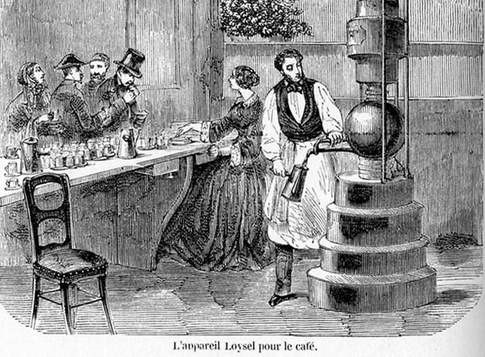
In 1901, Luigi Bezzera developed a machine that moved espresso closer to individual café service. His design introduced smaller brewing groups, allowing baristas to prepare separate portions of coffee rather than brewing one large batch. This reduced preparation time and created the foundation for the single-serving espresso model.
In 1905, Desiderio Pavoni purchased the rights to Bezzera’s invention and began manufacturing espresso machines commercially. Pavoni helped popularize espresso throughout Italy, placing machines in cafés and making quick, individually prepared coffee part of everyday urban life.
These early machines relied primarily on steam pressure. While they produced a concentrated cup of coffee, the pressure was limited and often resulted in a heavier, more bitter style of extraction. They did not create the crema associated with modern espresso.
A major breakthrough came in 1947 with Achille Gaggia. Gaggia developed a lever-operated espresso machine that separated brewing pressure from steam pressure. Instead of relying only on steam, the barista could manually create much higher pressure by pulling a lever. This allowed water to pass through the coffee at a much greater force, extracting more aromatic compounds and creating the layer of crema that became a defining characteristic of modern espresso.
In 1961, the introduction of the Faema E61 marked another major advancement. The E61 was one of the first machines to use an electric pump instead of manual lever pressure, creating more consistent extraction. It also introduced innovations such as heat exchange systems and pre-infusion, allowing machines to maintain temperature stability and improve shot consistency.
From these inventions, espresso continued to evolve. Modern machines now combine precise temperature control, pressure regulation, digital monitoring, and advanced engineering, but the goal remains the same: to pass water through coffee with enough control to reveal its best qualities.
From Italy, espresso culture spread around the world. Each country adapted it differently, from traditional Italian bars serving quick shots at the counter to modern specialty cafés exploring espresso through different origins, varieties, and roast profiles.
Despite its small size, espresso represents a significant transformation in coffee history. It changed not only how coffee was prepared and how people experienced it. Espresso is not a type of coffee bean or a specific roast. It is a brewing method that uses finely ground coffee, pressure, and a controlled extraction process to create a concentrated beverage.
The Espresso Recipe
Every espresso is an interpretation of the coffee itself.
The foundation begins with the quality of the coffee being used. A well-developed espresso blend provides the structure needed for a balanced extraction, allowing sweetness, acidity, and body to remain present through the brewing process.
Espresso coffees are often developed differently than coffees intended for filter brewing. Roasters consider factors such as roast development, solubility, and balance to create a coffee that can withstand the intensity of espresso while maintaining clarity and character. Our house espresso blend is designed to provide consistency while still expressing the qualities of the coffees within it. Once the coffee is roasted, espresso preparation becomes the process of revealing those characteristics. Baristas adjust variables such as dose, yield, grind size, and extraction time to achieve the intended balance of the coffee.
A typical espresso recipe includes:
Dose: 18g of ground coffee
Yield: 36g of espresso
Brew Time: 29 to 33 seconds
Target TDS: 6.5 to 8
The grind setting is adjusted as needed to maintain the desired extraction time. Coffee changes as it ages, humidity shifts, and environmental conditions fluctuate, making small adjustments a normal part of preparing espresso.
The recipe is not a fixed rule for every coffee. Different varieties, roast profiles, and processing methods require different approaches. The role of the barista is to use the recipe as a starting point, then refine the variables until the coffee expresses its best qualities. Look to our Brew Guide for more info on different brew methods.
Dialing In Espresso
Dialing in espresso is the process of adjusting the grind size to achieve a balanced extraction. The most important variable a barista adjusts is the grind setting. Small changes in grind size affect how quickly water moves through the coffee and how much flavor is extracted.
If the grind is too coarse, water moves through the coffee too quickly. The shot will finish too fast, often resulting in an under-extracted espresso that tastes sharp, sour, or thin.
If the grind is too fine, water moves through the coffee too slowly. The shot will take too long, often resulting in an over-extracted espresso that tastes bitter, dry, or heavy.
The goal is to find the point where water flows through the coffee at the correct rate, allowing the espresso to develop sweetness, clarity, and balance. Because coffee changes over time, baristas adjust the grind regularly to maintain consistency and quality in every shot.
Espresso in Specialty Coffee
For much of coffee’s history, espresso was approached primarily as a way to create intensity. Darker roasts were often favored for their boldness, body, and ability to stand up in milk-based drinks. Specialty coffee has expanded that perspective. Espresso is no longer viewed simply as an ingredient or a base for another beverage. It is a finished expression of the coffee itself.
Creating exceptional espresso requires attention at every stage. The coffee must be thoughtfully selected, carefully roasted, and precisely prepared to highlight its best qualities. The goal is not to overpower the coffee, but to preserve its sweetness, structure, and complexity through the extraction process.
A great espresso represents the combined work of the producer, the roaster, and the barista. Every adjustment, from roast development to grind size to extraction time, is made with the purpose of presenting the coffee at its highest potential.
Espresso is not just a small cup of coffee. It is a showcase of craftsmanship, precision, and the pursuit of excellence.

Share:
From Tea to Coffee: How a Revolution Changed What America Drinks
Rwanda Nyabumera Site