
From Tea to Coffee
This story begins with tea and ends with coffee.
In the early days of the American colonies, coffee was present, but it wasn’t the drink of choice. That honor belonged to tea. Throughout the 17th and much of the 18th century, tea was deeply woven into daily life in the New World, just as it was in England.
Coffee had already made its way across the Atlantic by the mid-1600s, arriving in places like New York City. Coffee houses began to appear, creating spaces for conversation, business, and community. Still, they existed in the shadow of tea’s dominance.
Everything began to shift in 1773.
When King George III imposed a heavy tax on tea, it wasn’t just an economic decision but a political one. The tax was widely seen by the colonists as unfair, sparking frustration and resistance.
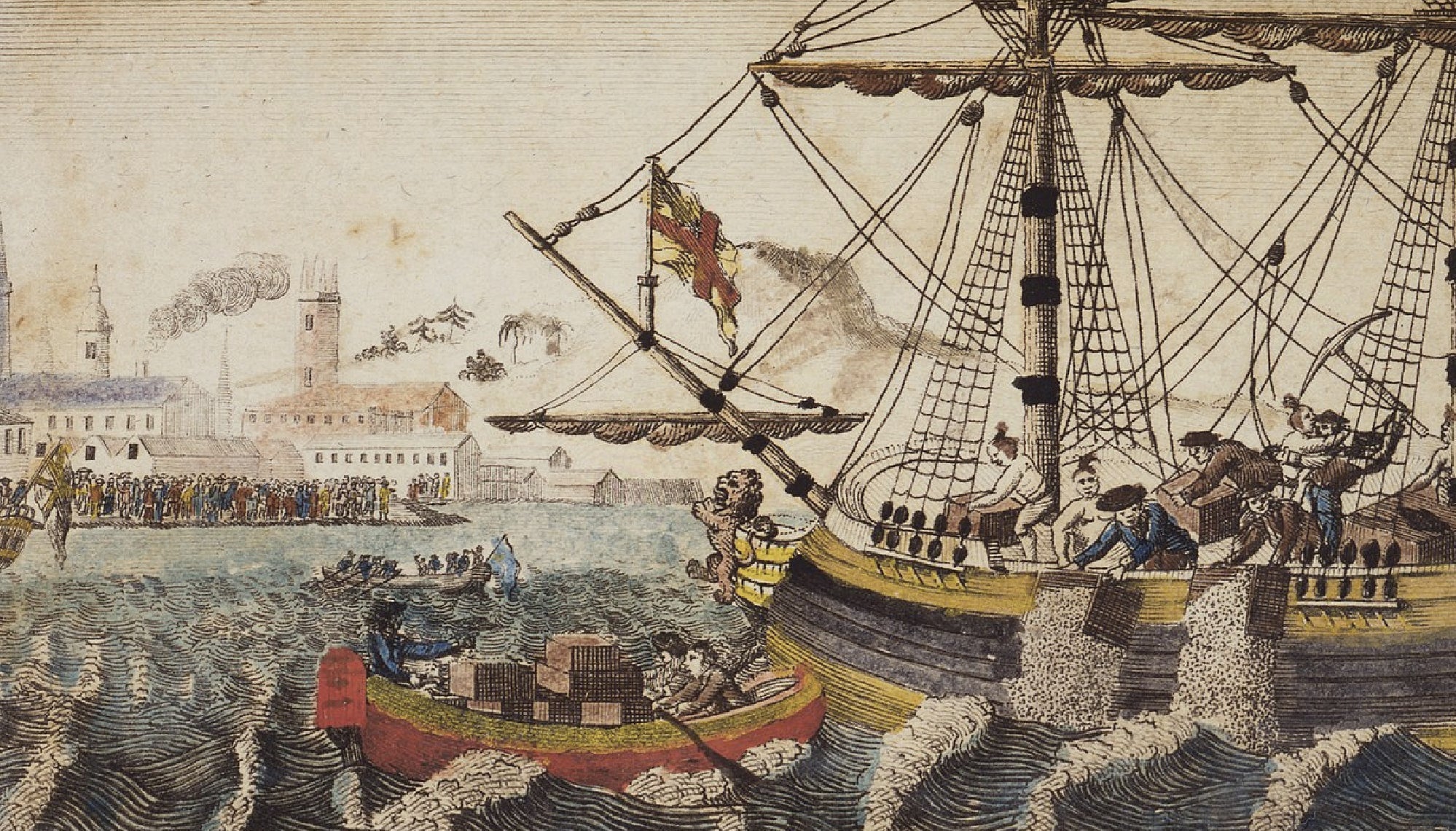
That tension reached a breaking point during the Boston Tea Party, when American colonists famously dumped shipments of British tea into Boston Harbor in protest. While this act is often remembered as a key moment leading up to the American Revolution, its impact didn’t stop at politics.
It also changed what people drank.
In the aftermath of the protest, tea became closely associated with British control. Choosing not to drink it became, in a sense, an act of independence. Coffee stepped in to fill that space, not just as an alternative, but as a symbol.
Over time, coffee grew from a secondary option into a daily staple. What began as a political shift gradually turned into a cultural one. Coffee houses expanded, and coffee itself became tied to ideas of independence, productivity, and identity in the growing nation.
Today, it’s hard to imagine American culture without coffee. Its rise wasn’t inevitable, it was shaped by conflict, protest, and a turning point that reached far beyond the harbor.
 Although coffee is rarely grown commercially within the continental United States, it has become one of the world's largest importers, roasters, and consumers of coffee. Green coffee continues to arrive from producing countries across Latin America, Africa, and Asia before being transformed by roasters throughout the country.
In many ways, roasting became America's contribution to coffee's history.
Each harvest carries the work of producers at origin, but roasting determines how that work is ultimately experienced. It is the final stage before the coffee reaches your cup, preserving the character of the variety, the landscape where it was grown, and the choices made throughout processing.
At Lore, this is the part of the story we have the privilege of joining.
We cannot cultivate Gesha in Panama or preserve ancient lineages in Yemen, but we can honor the work of those who do. Every coffee we roast represents generations of cultivation, movement, and refinement and the history carried across oceans.
The story of coffee in America didn't begin here, but it continues here. Happy 250th USA!
Share:
Carried Across the World
The History of Espresso