
A Rare Arabica Variety
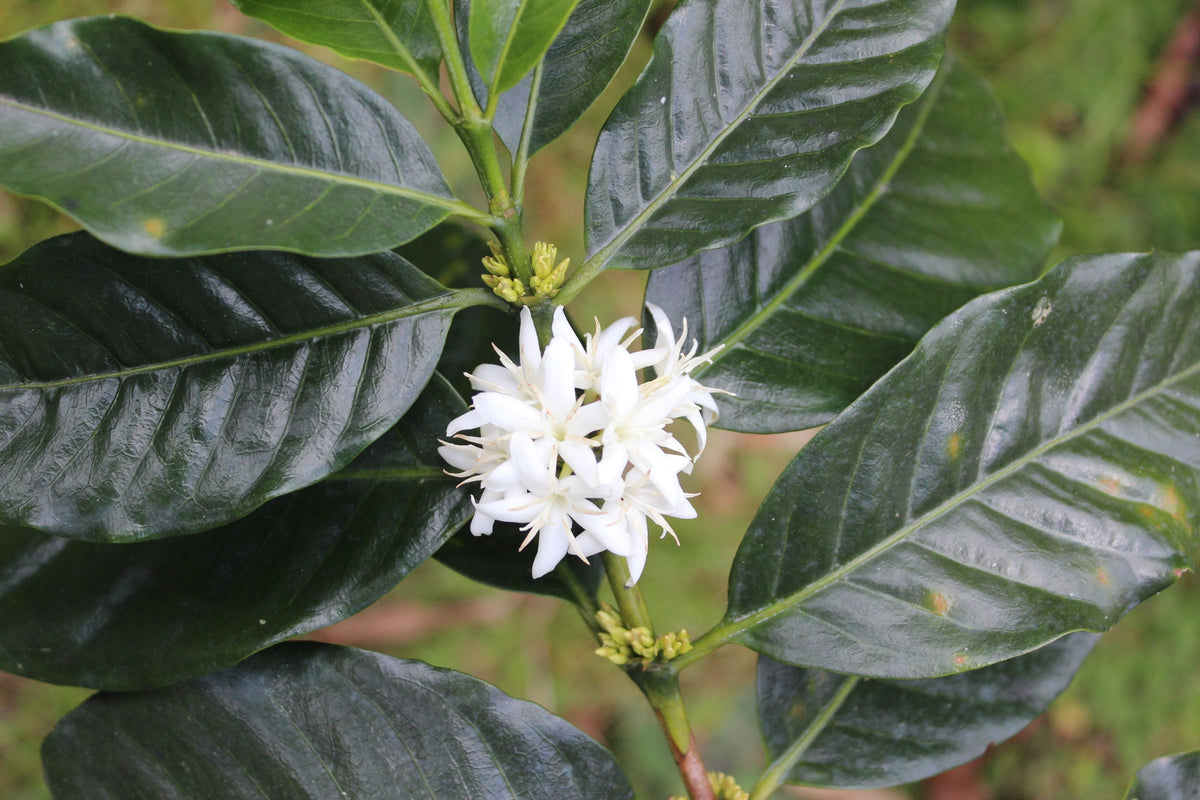
Sudán Rumé, also known as Rume Sudan, is a rare Arabica variety originating from the Rume region of the Boma Plateau in present-day South Sudan, near the Ethiopian border. It comes from one of the remaining wild populations of Coffea arabica, giving the variety a genetic history distinct from many of the cultivated coffees that dominate production today.
The variety was collected from the Rume region in 1941 and later introduced into international coffee collections and breeding programs. Its genetic diversity has made it valuable beyond specialty coffee, where it has also been studied as a resource for coffee breeding and the preservation of Arabica's genetic heritage.

A Difficult Variety to Cultivate
Sudán Rumé is not a variety selected for high production. The plants are naturally low-yielding and delicate, and they can be vulnerable to pests and disease. Cultivating them therefore requires a greater investment of land and labor for a comparatively small harvest.
This presents a significant challenge for producers. Most commercial coffee varieties have been selected for their ability to produce reliably under agricultural conditions. Sudán Rumé represents something different: a variety whose value lies in its genetic heritage and distinctive character rather than its productivity.
Its cultivation is consequently limited, and even producers who work with rare varieties may only have access to very small quantities.
Sudán Rumé at Finca El Paraíso
At Finca El Paraíso in Cauca, Colombia, Sudán Rumé is cultivated alongside a range of exceptional and experimental coffee varieties. The farm was established in 2012 by a family that did not inherit generations of coffee farming, but instead entered the industry with a desire to understand coffee more deeply.
That approach led Finca El Paraíso to explore the relationship between variety, cultivation, microbiology, fermentation, and processing. The farm has developed its own fermentation techniques and processing technology, with an emphasis on precision and consistency.
Sudán Rumé provides an especially interesting example of this philosophy. The variety itself brings a distinct genetic identity to the coffee, while the farm's cultivation and processing methods are used to preserve and reveal its character.

A Remarkably Small Harvest
The scarcity of Sudán Rumé becomes even more apparent in this particular release. Finca El Paraíso produced only one Sudán Rumé lot during the past year. According to the farm, Lore received the only allocation sent to the United States, while another 12 kilograms were sent to Switzerland.
For a coffee already limited by the nature of its genetics and cultivation, a harvest of this scale makes each release particularly fleeting. There is no guarantee that the same quantity, or even the same expression, will be available again.
Why Sudán Rumé Matters
Sudán Rumé represents an important part of Arabica's genetic history at a time when much of the world's coffee production relies on a relatively narrow selection of cultivated varieties. Its continued cultivation preserves characteristics that might otherwise become increasingly difficult to encounter in coffee.
For the drinker, however, its significance can be experienced much more simply: in the cup itself.
This particular lot represents a rare point in that history: an old and distinctive genetic lineage, carefully cultivated on a modern specialty coffee farm, and produced in quantities that may never be repeated in quite the same way.
Sudán Rumé · Washed
Melon · Lychee · Piña Colada
A rare variety, a limited harvest, and one of the few opportunities to experience it in this form. Experience it here.

Share:
Refine Your Pallet: Finca El Paraíso