
NOVEMBER 9 · FEAST OF ST. NEKTARIOS OF AEGIN

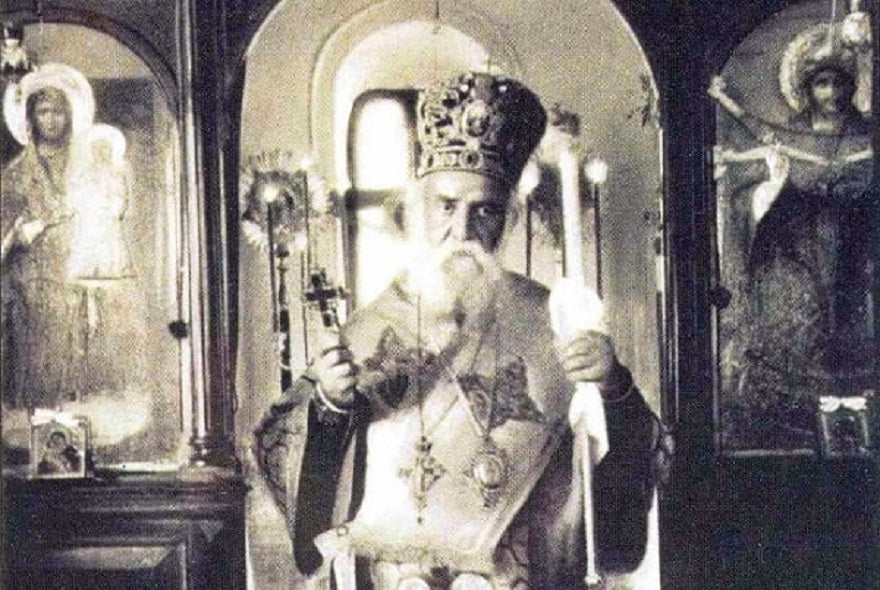
Saint Nektarios was born Anastasios Kephalas on October 1, 1846, in Selyvria, a small town in Eastern Thrace, near Constantinople (present-day Istanbul). He was raised in a poor but devout Orthodox Christian family, where he developed an early love for prayer, Scripture, and the teachings of the Church.
At approximately fourteen years old, Anastasios left his family and traveled to Constantinople in pursuit of an education and employment. Life was not easy. He worked to support himself while continuing his studies, demonstrating a determination to pursue both learning and a life devoted to God.
In 1866, he moved to the island of Chios, where he worked as a teacher. It was there that his desire for monastic life grew. On November 7, 1876, he entered the Monastery of Nea Moni and received the monastic tonsure, taking the name Lazarus. The following year, he was ordained a deacon and given the name Nektarios, by which he would become known throughout the Orthodox world.
His theological abilities and devotion eventually brought him to Athens, where he studied at the University of Athens, graduating in 1885.

Ministry in Alexandria and the Years of Persecution
Following his studies, Nektarios traveled to Alexandria, Egypt, where he entered the service of the Patriarchate of Alexandria. He was ordained to the priesthood and quickly became known for his preaching, pastoral care, and theological knowledge.
In 1889, he was consecrated Metropolitan of Pentapolis by Patriarch Sophronios of Alexandria. His responsibilities included serving the Orthodox faithful and assisting in the administration of the Church.
However, his growing reputation and popularity also attracted jealousy. In 1890, false accusations and ecclesiastical intrigue led to his removal from his position. Without a proper opportunity to defend himself, he was forced to leave Egypt and return to Greece.
What followed was a period of considerable hardship. His reputation had been damaged by the accusations, and he struggled to find employment and financial stability. Despite his education and former ecclesiastical position, he found himself without the support and recognition he had once known.
Yet St. Nektarios did not respond with bitterness or retaliation. He continued to forgive those who had wronged him, placing his trust in God rather than seeking vindication through worldly recognition.
In a letter to Patriarch Sophronios, he expressed his willingness to forgive those who had sinned against him, reflecting the spirit of Christ's teaching on forgiveness.
His response to persecution remains one of the most defining aspects of his life. Rather than allowing injustice to diminish his faith, he continued his work in the Church with humility and patience.
The Rizarios Ecclesiastical School
After returning to Greece, St. Nektarios initially served as a preacher in the region of Euboea and later in the region of Phthiotis.
In 1894, he was appointed director of the Rizarios Ecclesiastical School in Athens, an institution dedicated to the education and formation of future clergy.
He served in this position for fourteen years, becoming deeply respected by students and colleagues alike. His approach to education extended beyond academic instruction. He emphasized the importance of spiritual discipline, moral character, humility, and a life grounded in the teachings of the Church.
Although he held a respected position, he was known for his simplicity and willingness to perform ordinary tasks. He did not consider himself above the work of others, and his leadership was characterized by personal example rather than authority alone.
During these years, he also continued writing theological works, preaching, and offering spiritual guidance.
Holy Trinity Monastery on Aegina
One of the most significant chapters of St. Nektarios's life began on the Greek island of Aegina.
In 1904, at the request of several women who desired to pursue monastic life under his spiritual guidance, he established the Holy Trinity Monastery (Agia Triada). The community grew, and in 1908 he resigned from his position at the Rizarios School to devote himself entirely to the monastery.
There, he served as spiritual father to the nuns and oversaw the development of the monastic community.
His life on Aegina was marked by remarkable simplicity. Despite having once held the rank of Metropolitan, he lived as a humble monk, participating in the daily work of the monastery. He tended the gardens, carried stones, assisted with construction, and cared for the practical needs of the community.
He used his own resources to help establish the monastery and spent his days in prayer, writing, teaching, and hearing confessions.
His humility was not simply an outward characteristic. It was reflected in the way he approached every responsibility, whether spiritual or ordinary. He believed that no work performed in service to God was beneath him.
The monastery became a place of spiritual refuge for many who sought his counsel, and his reputation for holiness and spiritual discernment spread throughout Greece.

The Story of Coffee and St. Nektarios
There is a particular story from the Holy Trinity Monastery that has become especially beloved among those who know St. Nektarios. It is a story that feels particularly close to home for us at Lore.
According to a traditional account, St. Nektarios had established a daily routine for the sisters of the monastery that included drinking coffee both in the morning and in the evening.
During the German occupation of Greece in the 1940s, coffee and sugar became increasingly difficult to obtain. With supplies running low, the abbess decided that the sisters should stop drinking their evening coffee in order to preserve what little remained.
That night, St. Nektarios appeared to the abbess in a dream and reminded her that the sisters were to continue receiving their evening coffee as he had instructed. When she explained the shortage, he reassured her that the provisions would be taken care of.
According to the story, a ship carrying coffee and sugar was traveling near the island of Aegina that same night. Its captain dreamed of St. Nektarios, who instructed him to deliver a supply of coffee and sugar to the monastery.
Upon waking, the captain asked his crew whether anyone was from Aegina. Several men were, and when he described the man from his dream, they recognized him as St. Nektarios. The captain was then able to arrange for the provisions to be delivered to the sisters.
The unexpected delivery provided the monastery with the very supplies they had been lacking.
Though this account belongs to the devotional tradition surrounding the saint rather than his documented biography, it has remained a cherished story among the faithful.
For us, it is a particularly meaningful reminder that the life of a monastery is made up not only of great spiritual works, but also of ordinary daily rhythms, shared meals, hospitality, and even a simple cup of coffee.
His Final Years and Repose
St. Nektarios spent his final years on Aegina, continuing his work as a spiritual father and serving the monastic community.
Despite suffering from serious illness, he remained devoted to prayer and the care of those around him. In 1920, his health deteriorated, and he was eventually taken to a hospital in Athens, where he was placed in a ward for patients of limited means.
He reposed in the Lord on November 8, 1920, at the age of seventy-four.
His body was returned to the Holy Trinity Monastery on Aegina, where he was buried. Accounts of the events following his repose describe a remarkable fragrance surrounding his relics, and reports of healings through his intercession began to spread.
His reputation for holiness, already well established during his lifetime, continued to grow after his death.
On April 20, 1961, the Ecumenical Patriarchate of Constantinople formally recognized him among the saints of the Orthodox Church. His feast is celebrated annually on November 9, the day following his repose.
Today, the Holy Trinity Monastery and the great church dedicated to him on Aegina remain important pilgrimage destinations for Orthodox Christians from around the world.
The Legacy of a Wonderworker
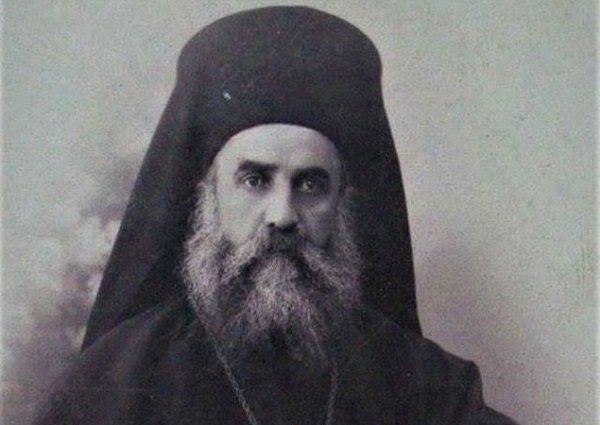
St. Nektarios is remembered as a bishop, theologian, teacher, monastic founder, and wonderworker. Yet much of what makes his life so compelling is found not in his titles or accomplishments, but in the manner in which he lived.
He endured false accusations without surrendering to resentment. He experienced poverty without abandoning generosity. He held positions of authority without considering himself above ordinary labor. And throughout years of hardship, he remained steadfast in his devotion to Christ.
His life is a testament to the quiet strength of humility, forgiveness, and perseverance. He reminds us that holiness is not measured by worldly recognition or position, but by the disposition of the heart and the willingness to serve God in all circumstances.
For Lore Coffee Roasters, St. Nektarios holds a particularly special place as the patron saint of our coffee house. His connection to the monastery's beloved coffee story is a small but memorable part of his legacy, and a reminder of the fellowship and hospitality that can gather around something as simple as a shared cup.
We are grateful for his intercessions and ask his prayers for our coffee house, our community, and all those who gather at our tables.
Discover the life of St. Nektarios of Aegina in Man of God, a film portraying his humility, endurance, and unwavering faith in the face of persecution. A beautiful tribute to the Wonderworker of Aegina. Watch Man of God for free here.
"Don't let anything deprive you of hope." — St. Nektarios of Aegina
St. Nektarios of Aegina, Metropolitan of Pentapolis and Wonderworker, pray to God for us.

Share:
The Importance of Rest