
Yemen : Mother & Daughter
This release is extremely limited and built around a single box set: Mother & Daughter.
Mother & Daughter is a limited Yemen box set built around two coffees that carry some of the oldest known threads of Arabica’s cultivated history. Grown in Yemen’s high mountain terraces by women-led farming collectives, these coffees come from lineages shaped over centuries of isolation, selection, and careful stewardship. This is not a modern interpretation of origin, but a direct encounter with Arabica as it has been preserved and passed down through living agricultural tradition.
Each set includes two 8oz (227g) coffees grown in Yemen’s high-altitude terraced mountains by women-led farming collectives working in some of the most remote and demanding coffee-growing conditions in the world.

Yemen: The Origin of Cultivated Coffee
Yemen holds a unique place in the history of coffee. It is one of the earliest regions where Coffea arabica was cultivated as a crop, with trade centered around the Red Sea port of Mokha shaping coffee’s global journey centuries ago.
Arabica was first discovered in the forests of Ethiopia, but it was in Yemen that it became one of the earliest cultivated agricultural coffees. Here, coffee moved from wild plant to tended crop, shaped by human selection, isolation, and mountain geography.
From the port of Mokha, Yemen became the center of early coffee trade, and through this movement Arabica began its dispersion across the world.
Yet within Yemen itself, something different remained. The isolation of high mountain terraces, combined with generations of selective cultivation, preserved ancient Arabica populations that continued to evolve in place rather than spread outward.
Many of the world’s modern coffee lineages can trace part of their genetic story back through Yemen’s historic trade routes and early cultivated populations. Even today, Yemen remains one of the only places where arabica is still grown in traditional terraced systems largely unchanged for generations.

Mother & Daughter — Yemen Box Set (2 × 8oz)
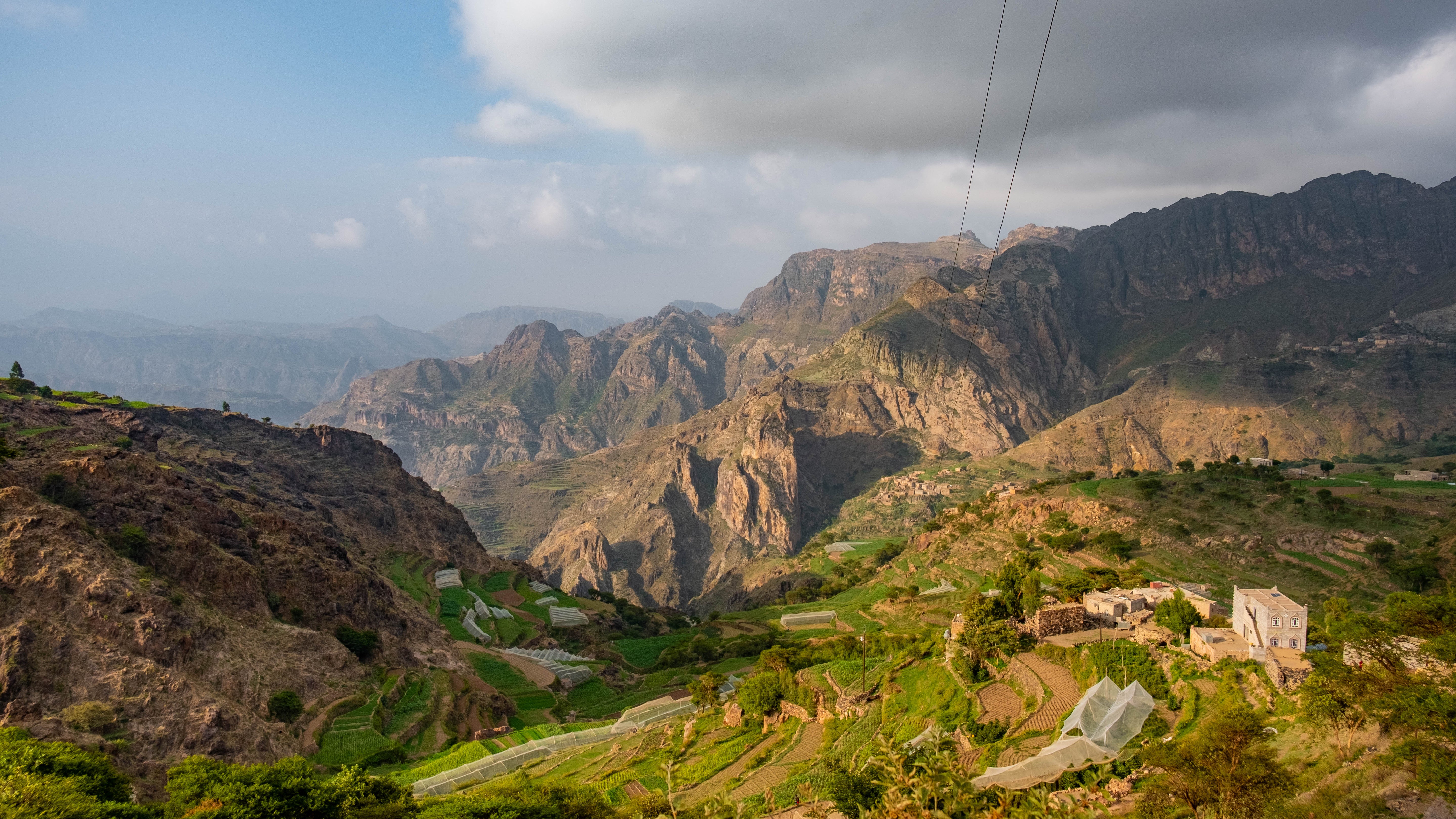
Yemen’s coffee farms are defined by terraces with hand-built stone walls climbing steep mountainsides, holding together small, biodiverse plots of coffee, fruit trees, and subsistence crops.
Mother & Daughter brings together two expressions of this landscape: one rooted in a newly identified Arabica population found only in Yemen, and one from a lineage that left Yemen centuries ago and has now returned.
Both coffees come from neighboring highland regions where farming is entirely manual, seasonal, and shaped by generations of inherited knowledge. These nano lots showcase the long history of coffee and where its headed today.

Hejrat Al-Ain Women Farmers — Yemenia (Natural)
Tasting Notes: Red Grape · Blackcurrant · Stewed Strawberry
Region: Hejrat Al-Ain, Al-Haymah Al-Dakhiliyyah, Sana’a
Elevation: 2000–2300 masl
Process: Natural (Raised-Bed Drying)
Farmers: Hejrat Al-Ain Women Farmers
Weight: 8oz / 227g
High in the remote mountains of Hejrat Al-Ain, coffee is grown in some of the most isolated and elevated terraced landscapes in Yemen. The farms here are not large continuous fields, but small stone-built terraces carved into steep mountainsides over generations. Each terrace holds a few rows of coffee trees, often surrounded by subsistence crops and shade trees, forming a tightly interwoven agricultural system.
The Hejrat Al-Ain Women Farmers collective works across these fragmented plots, tending trees that have been selected and propagated within the region for generations. Farming here is entirely manual. Every stage, from pruning to harvest, is done by hand due to the steep terrain and limited infrastructure. Movement between terraces is slow and deliberate, shaped by the geography itself.
This lot comes from Yemenia, a newly identified mother population of Arabica discovered through Qima Coffee’s genetic research in 2020. It is not a widely distributed cultivar, but a distinct genetic population that exists only within Yemen’s highland terraces. Its preservation is directly tied to the isolation of these mountain farms, where limited external planting and long-term selective cultivation have allowed unique Arabica genetics to remain intact over time.
Cherries are selectively hand-picked at peak ripeness and then moved to raised drying beds, where they dry slowly over 15 to 25 days. The process is highly dependent on mountain climate conditions, with constant turning required to ensure even fermentation and stability. This extended drying phase allows both the genetic character of Yemenia and the terroir of Hejrat Al-Ain to fully express, resulting in a dense, structured natural cup shaped by place, lineage, and time.


Al Ofairi Women Farmers — Kent (Natural)
Tasting Notes: Baked Peach · Tangerine · Black Tea · Floral · Caramel
Region: Bani Ofair, Maghrab Ans, Dhamar
Elevation: 1900–2100 masl
Process: Natural (Raised-Bed Drying)
Farmers: Al Ofairi Women Farmers
Weight: 8oz / 227g


The Farms Behind the Coffees
Across both coffees, what stands out most is not scale, but intimacy.
These are small, terraced farms built into steep mountainsides over generations. Everything is manual, planting, harvesting, drying, often done within the same family or women-led collectives who have worked these lands for decades.
Coffee here is not separated from life. It exists alongside subsistence crops, fruit trees, and livestock in tightly interwoven agricultural systems designed for survival in harsh terrain.


Share:
From the Vault | The Citrine, Colombia - Faber Pacheco
Coffee Processing Methods: Natural, Washed, & Honey