

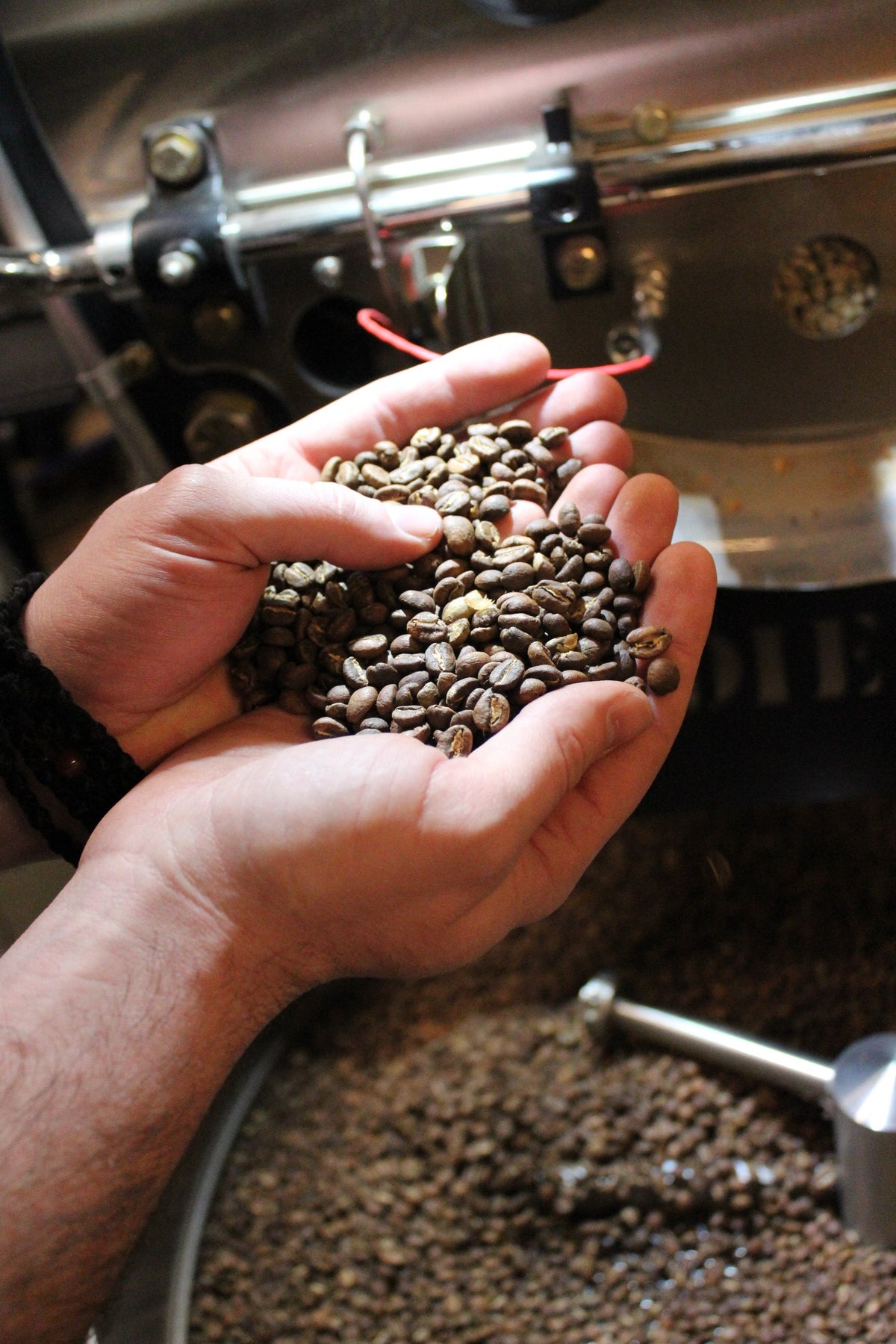
Why freshly roasted coffee needs time before it is ready to brew.
Freshly roasted coffee is often associated with peak freshness, but coffee straight from the roaster is not necessarily ready to brew. In fact, one of the most important stages of developing a coffee's full character happens after roasting, during a period known as resting.
Resting refers to allowing roasted coffee to sit for a period of time before brewing. During this time, the coffee undergoes a natural process called degassing, gradually releasing carbon dioxide (CO₂) that was produced and trapped within the beans during roasting.
What Happens After Roasting?
As coffee beans roast, a series of complex chemical reactions take place, developing the aromatic compounds responsible for their flavor and fragrance. These reactions also produce carbon dioxide, some of which remains trapped within the structure of the bean after roasting.
Once roasting is complete, the beans begin releasing this gas. This process continues for days, and sometimes weeks, depending on the coffee's origin, density, processing method, roast development, and other factors.
While carbon dioxide is a natural byproduct of roasting, too much of it can interfere with extraction. When hot water meets freshly roasted coffee, the escaping gas creates resistance, making it more difficult for water to evenly saturate the grounds. This can lead to uneven extraction and a cup that tastes sharp, muted, or difficult to balance.
Allowing coffee to rest gives excess carbon dioxide time to escape, helping water interact more evenly with the grounds during brewing.

Developing Flavor and Clarity
Degassing is only part of the story. Resting also allows the coffee to become more consistent and expressive in the cup.
Coffee brewed too soon after roasting can taste unsettled. Aromatic characteristics may be difficult to distinguish, acidity can feel unusually sharp, and sweetness may not yet be fully apparent. As the coffee rests, these qualities often become more balanced and recognizable.
This is particularly important with lighter-roasted specialty coffees. Because lighter roasts generally retain more carbon dioxide and can be more challenging to extract, they often benefit from a longer resting period.
With time, individual characteristics become easier to perceive. Delicate florals, fruit, sweetness, and acidity can present with greater clarity, allowing the distinctive qualities of a coffee to come forward.
How Long Should Coffee Rest?
There is no universal resting period. Every coffee develops differently, and the ideal window depends on the bean itself and the intended brewing method.
As a general starting point:
-
Light roasts: 10–21 days
-
Medium roasts: 7–14 days
-
Dark roasts: 3–10 days
These are guidelines rather than strict rules. Some coffees may reach their best expression earlier, while others continue developing well beyond these windows.
The best approach is to experiment. Brew the same coffee at different intervals and pay attention to how its sweetness, acidity, aroma, and overall balance change over time.
Freshness Is Not the Same as Readiness
Freshness is an important part of specialty coffee, but it is not simply a matter of brewing as soon as possible after roasting. Coffee needs time to move through the changes that take place after it leaves the roaster.
Resting is not a loss of freshness. It is part of the process of preparing coffee to be enjoyed at its best.
At Lore, we recognize that roasting is only one part of revealing a coffee's character. Understanding what happens after roasting is equally important. Giving coffee the time it needs allows the work of the producer, the character of the variety, and the decisions made during roasting to be more fully expressed in the cup.
LET THOSE BEANS REST!

Share:
Understanding Coffee Tasting Notes