
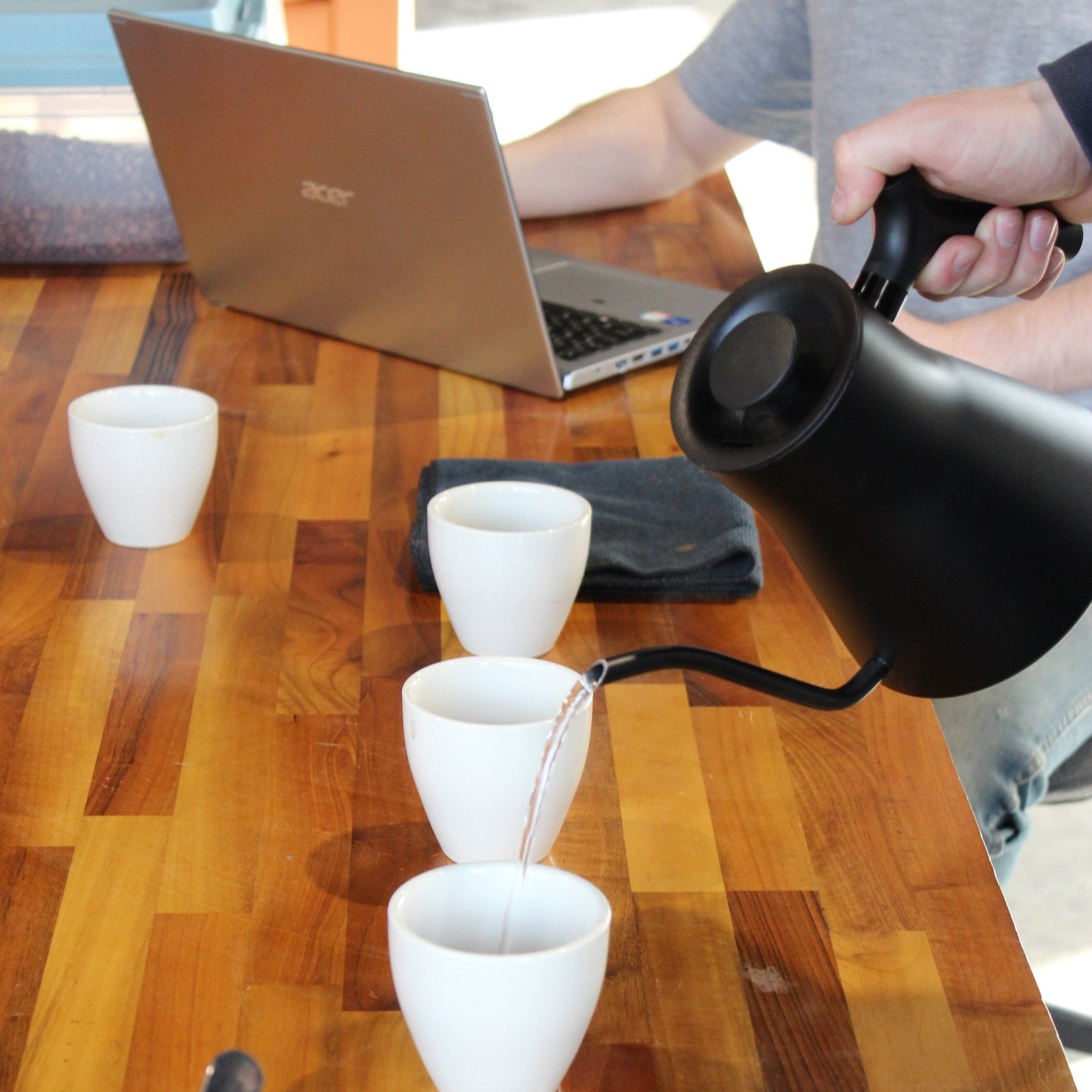
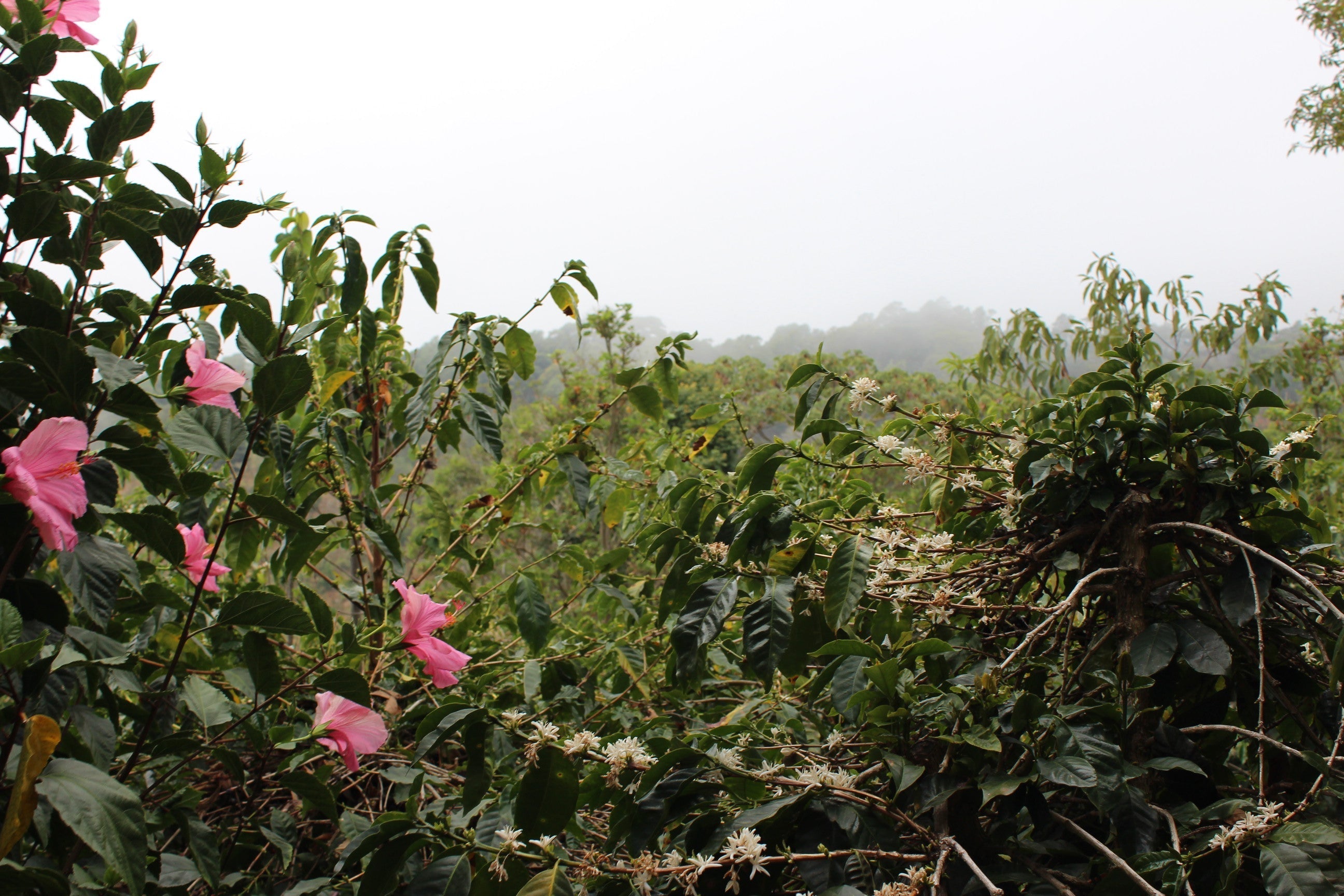
We had the great opportunity to visit the Damarli Estate in Panama. This was our first origin trip and hopefully not the last! Staying at the farm offered us a clear, comprehensive look at how specialty coffee is grown, processed, and developed at origin.
Located in the Boquete Valley between Palmira Arriba and Volcancito, the farm sits at 1450–1500 meters on Volcán Barú. This area is known for its elevation, volcanic soils, and distinct seasonal climate.

Origins of Damarli Estate
Damarli Estate was officially established in 1996, but its story begins in 1994 when the David and Lia Pech traveled to Panama to visit Lia's family in Panama. The Ruiz family had been deeply involved in coffee for generations. At the time, the family operated Casa Ruiz, one of the largest exporters of green coffee in Panama, with roots dating back to the late 1800s.
During that visit, Lia’s father, Plinio A. Ruiz, introduced the Pech family to available farmland in Boquete. After initially attempting to purchase a different property in Palmira and facing disappointment when it fell through, an opportunity opened up to acquire a farm located between Palmira Arriba and Volcancito. The families moved quickly, and the property was secured in 1996.
The name “Damarli” is derived directly from the founders and family members:
DA – David
MA – Manfred
R – Ruth
LI – Lia
This naming reflects the family-driven foundation of the estate, which continues to shape its identity today.

Early Development & Planting
When the property was acquired, it had not been cultivated with coffee for roughly a decade. The early years focused on rebuilding the farm, renovating infrastructure and replanting coffee.
Initial varieties included: Bourbon, Catuai, and Typica.
By 2000, the estate produced its first harvest, which was processed and exported through Casa Ruiz as part of a regional blend.
Expansion Into Specialty Coffee
The global rise of specialty coffee, particularly following the early 2000s recognition of Geisha in Panama had a significant influence on Damarli’s direction.
In 2006, Geisha seeds sourced from the Peterson family were introduced and planted on the estate. This marked an important step toward higher-quality, variety-focused production.
A major transition occurred in 2014 when David and Lia’s son, Keith Pech, moved to Panama to focus on developing Damarli as its own specialty coffee brand. His work included:
-
Mapping and identifying specific plots across the farm
-
Learning professional coffee evaluation through cupping
-
Building relationships with international buyers
-
Shifting focus toward traceability and quality-driven production
Keith later became a certified Arabica Q Grader in 2016, strengthening the estate’s ability to evaluate and refine its own coffees.

Farm Structure & Terroir
Damarli Estate spans approximately 18 hectares, with 12 hectares under coffee cultivation and 6 hectares preserved as primary forest.
The farm is divided into 11 plots based on topography and sun exposure. Some plots face south toward the Pacific Ocean, while others face north, creating variation in growing conditions across relatively small distances.
The soils are volcanic sandy clay loam, contributing to strong nutrient availability and drainage.
Boquete’s climate plays a major role:
-
A defined dry season allows for consistent sun drying on raised beds
-
A rainy season brings rapid weather changes and cloud forest conditions
The estate’s preserved forest also provides natural protection from strong trade winds, helping stabilize drying conditions.
Varieties Grown
Damarli produces a range of coffee varieties, each selected for different characteristics and potential. Varieties grown include: Panama Geisha, Red Bourbon, Pacamara, Typica, and Catuai.
In addition to coffee, the farm also grows orange, banana, plantain, and avocado trees, contributing to a more diverse agricultural environment.

Processing & Infrastructure
Over time, Damarli has invested heavily in processing and quality control.
Key developments include:
-
Construction of raised drying beds for better control over moisture and airflow
-
Building of the “Don Manfred” processing mill
-
Establishment of an on-site cupping lab for evaluating individual lots
The introduction of raised beds in 2015 allowed for the separation of smaller “day lots,” making it possible to track and refine quality at a much more detailed level.
Beginning in 2018, the estate also started experimenting with new fermentation methods, aiming to better understand how processing impacts flavor including David's own Anaerobic Yeast Fermentation process called the Noble.

Recognition & Achievements
These improvements have led to strong performance in quality competitions:
-
2019: 1st Place Pacamara and 2nd Place Traditional Natural at Best of Panama
-
2020: 2nd Place Pacamara
-
2025: Geisha lot qualified for the international round of Best of Panama and placed in the top 20, later selling at auction for $680/kg
These results reflect the estate’s ongoing shift toward precision, traceability, and high-quality specialty production.
A Connected System
The estate has also expanded to include lodging, allowing visitors to experience coffee production firsthand, from the farm to the cup.
Why It Matters
Damarli Estate provides a clear example of how specialty coffee develops over time. It shows how decisions around variety, processing, and farm management directly impact quality.
Rather than focusing on one single factor, the estate demonstrates how multiple elements—climate, soil, people, and process—work together to produce coffee at a high level.
For anyone looking to better understand specialty coffee, it offers a complete picture of what happens at origin and how much work goes into every lot long before it reaches the roaster. It was an experience of a lifetime to visit this beautiful estate.
Learn More About Damarli Here -> https://www.damarliestate.com/

Pictured Damarli Estate Owner - David Pech
Share:
Why Altitude Matters in Coffee
The Story of Coffee in Panama