
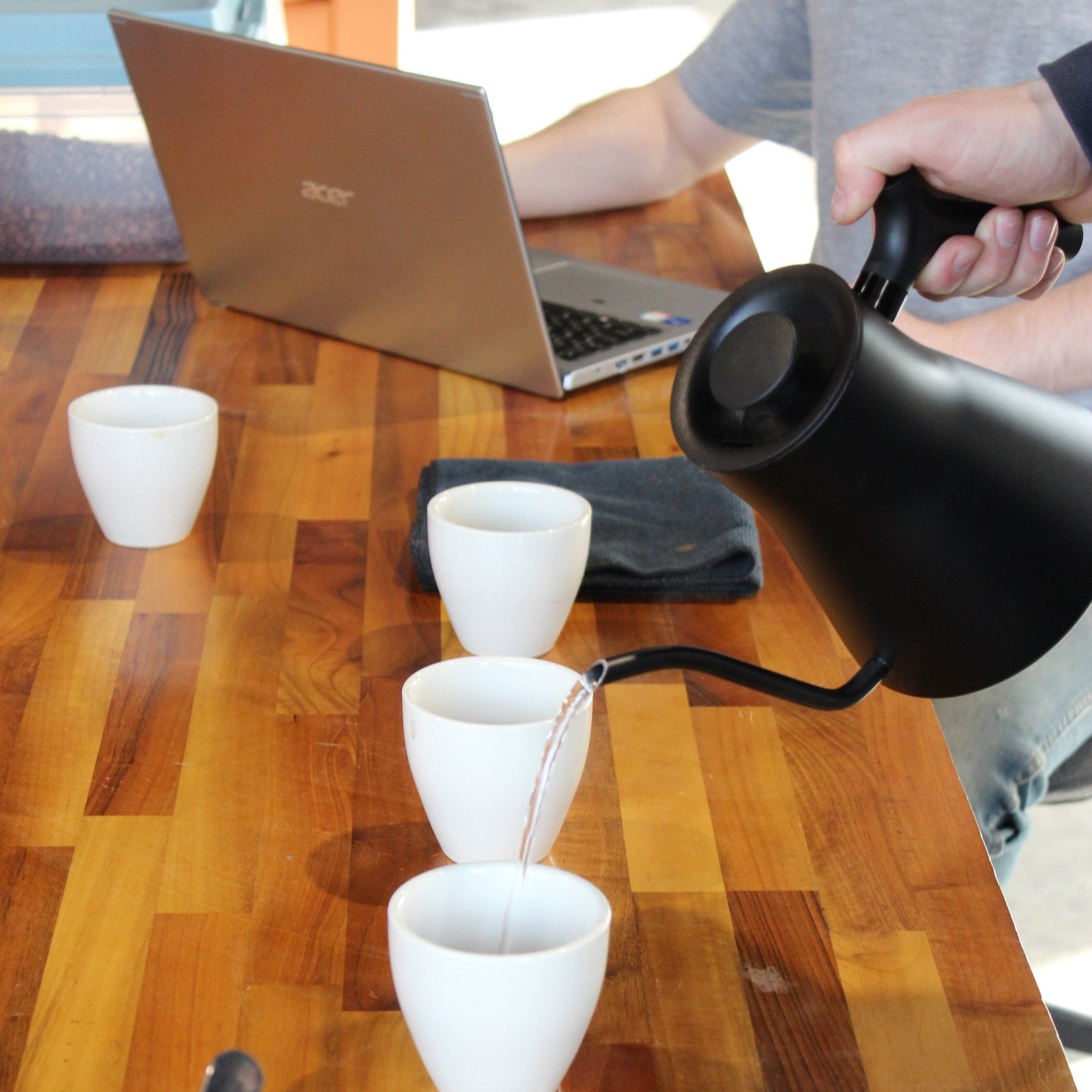

Specialty Coffee Beverages
Coffee shops often offer a wide variety of drinks, but most of them are built from the same two ingredients: espresso and milk. Each drink has its own balance of these elements, creating different textures, strengths, and flavors. Many of these beverages also have interesting histories connected to café culture around the world.
Here’s a closer look at some of the most common coffee drinks.
Pour Over | 8 - 12oz
Manual brewed coffee made with seasonal single-origin coffees
Pour over coffee is a manual brewing method where hot water is slowly poured over freshly ground coffee. The water passes through the grounds and a filter, extracting the coffee as it flows into a carafe or cup below.
This method allows the brewer to control the speed and flow of the water, which can highlight delicate flavors in the coffee. Because of this precision, pour overs are often used to showcase single-origin coffees with complex flavor profiles.
While manual brewing methods have existed for centuries, the modern pour-over style became especially popular in specialty coffee during the early 2000s as cafés began focusing more on clarity and origin-driven flavors.
Espresso | 2oz
Double shot of espresso — house blend or single origin
Espresso is a concentrated coffee brewed by forcing hot water through finely ground coffee under high pressure.
The result is a small but intense beverage with a rich body and a layer of crema on top.
Espresso originated in Italy in the early 20th century when new machines were developed to brew coffee quickly for café customers. The name “espresso” refers to coffee made expressly for the customer, brewed on demand.
Today, espresso serves as the foundation for many popular café drinks.
Macchiato | 3oz
Double shot of espresso with a dollop of steamed milk
The word macchiato means “stained” or “marked” in Italian.
A traditional macchiato is simply espresso “stained” with a small amount of milk foam. The milk slightly softens the intensity of the espresso while still allowing the coffee’s flavor to remain the focus.
This drink was originally created so baristas could mark espresso with a little milk for customers who wanted something slightly less intense.
Cortado | 4oz
Equal parts espresso and steamed milk
A cortado is made with equal parts espresso and warm milk. The milk reduces the acidity and intensity of the espresso while maintaining a strong coffee flavor.
The name cortado comes from the Spanish word “cortar,” meaning to cut, referring to how the milk “cuts” the strength of the espresso.
This drink is especially popular in Spain and throughout Latin café culture.
Cappuccino | 6oz
Espresso and steamed milk
The cappuccino is one of the most recognizable espresso drinks. In the United States it is usually made with espresso, steamed milk, and a thick layer of milk foam.
However, at our coffee house, we prepare cappuccinos in the traditional style. A 6oz drink served in a smaller cup with less milk and a balanced layer of foam. This keeps the drink rich and espresso-forward while still offering the creamy texture that makes a cappuccino distinctive.
The name comes from the Order of Friars Minor Capuchin, whose brown robes were said to resemble the color of the drink when espresso and milk are combined.
Cappuccinos became widely popular in Italian cafés in the early 1900s and later spread around the world.
Latte | 8oz or 12oz
Espresso and steamed milk
A latte is made with espresso and a larger amount of steamed milk, resulting in a smooth and mild coffee drink.
The name comes from the Italian phrase caffè latte, meaning “coffee with milk.”
Because of its higher milk content, the latte is often used for latte art, where baristas pour textured milk into the espresso to create patterns on the surface.
Drip Coffee | 8oz or 12oz
Drip coffee is one of the most common brewing methods, especially in homes and cafés.
In this method, hot water flows through ground coffee held in a paper or metal filter. The brewed coffee then drips into a pot or server below.
Drip coffee became especially popular in the mid-20th century with the rise of automatic coffee makers. It produces a balanced, approachable cup that works well for everyday drinking.
Americano | 8oz or 12oz
Espresso and hot water
An Americano is made by adding hot water to espresso, creating a drink similar in strength to brewed coffee but with the flavor characteristics of espresso.
According to popular stories, the drink became common during World War II when American soldiers stationed in Italy diluted espresso with water to make it taste more like the coffee they were used to at home.
Cold Brew | 12oz or 16oz
Cold brewed coffee served over ice
Cold brew coffee is made by steeping coffee grounds in cold water for an extended period, usually 12–24 hours.
Because it is brewed without heat, cold brew tends to have: Lower acidity, a smoother flavor, and a naturally sweet profile.
Although cold brewing coffee has existed for centuries, it has become especially popular in specialty cafés over the last decade.
A Shared Foundation
While these drinks may seem very different, most of them begin with the same foundation: carefully brewed coffee or espresso.
Small changes in brewing method, milk texture, and ratios create a wide range of drinks, each with its own history and character. Understanding these differences can help you appreciate not only what’s in your cup, but the craft behind it.

Share:
How Coffee Becomes Specialty Grade
The Coffee Plant: From Seed to Cup